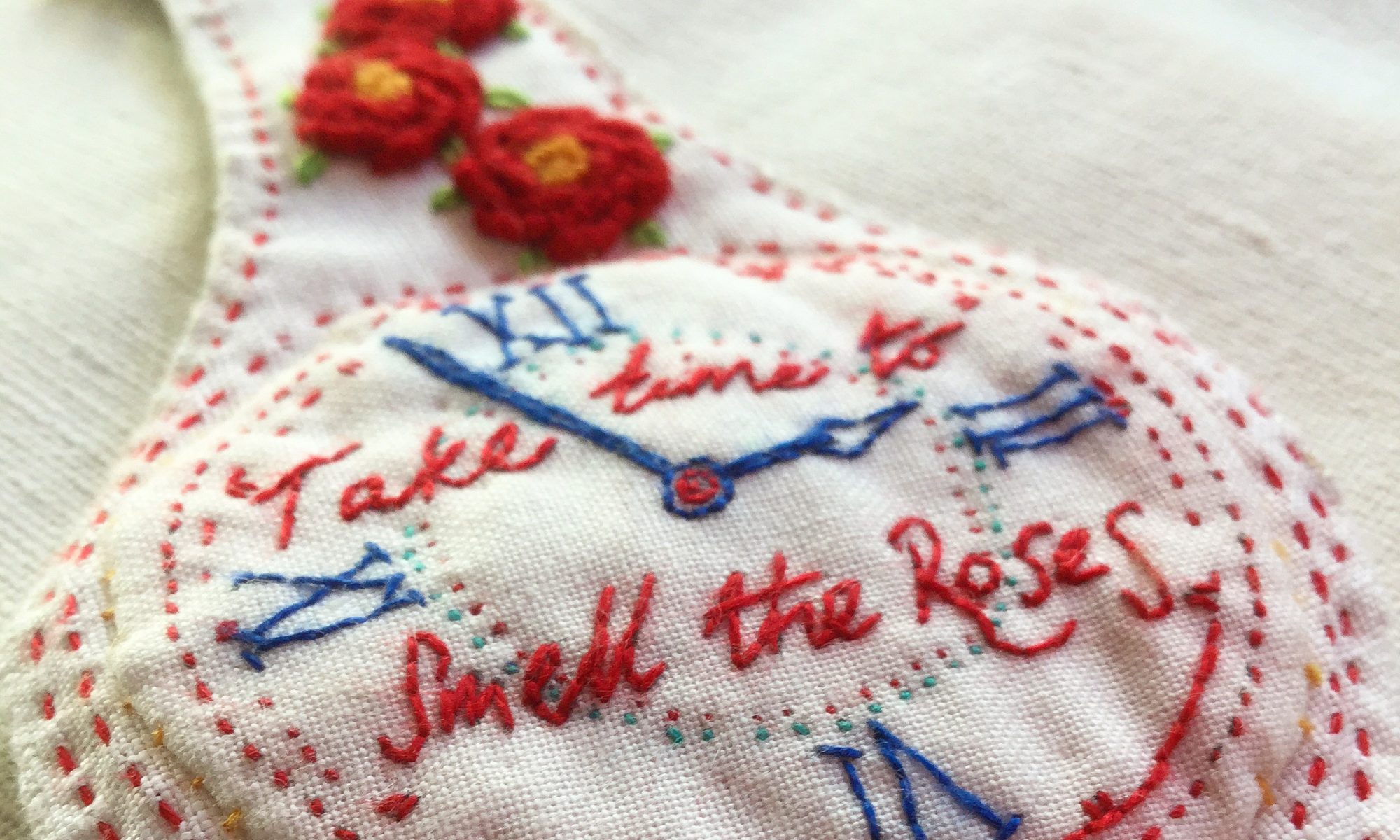
This is another stitch I have used many, many times in my own work, but had always stitched it using two strands of DMC and not thought about the difference it would make just by varying its size and density – so it was therapeutic to set time aside to experiment with it. This sample was created on Irish Linen fabric and using DMC cotton thread working with one strand and building up to six.
This experimental sample was created on 100% wool plaid upholstery fabric using DMC stranded embroidery thread, creating the variegation in stitch by using 1 – 6 strands. The sample has French Knots and Bullion Knots. I love the contrast in textures from the softness of the wool with the sheen of the stitch.
I hope you are inspired to have a play with thread yourself.
I knew very little about mark making and its importance before starting this embroidery course. Anything that involves paint and making a mess has to be good in my books!
I will share with you what I have discovered. Mark making can be achieved with anything that leaves a mark or impression on a surface – eg. paint or pen on paper, drawing in the sand at the beach, or even playing with string as it falls its own way onto a flat surface. The original ‘mark’ created is an original form of source work perfect for a future design.These are some designs made using bits and bobs I found in my kitchen. I found it very effective using white paint onto black paper. Also I liked using black and white rather than specific colours because I found they created a neutral, unbiased design.
Design sheet 1:
Design sheet 2:
These are a selection of marks evoking movement and emotion.
The Staccato design was developed further into a homemade stamp that was then embroidered.
The one thing I have discovered is that anything goes, and that all designs – especially the ‘mistakes’ are useful. I keep mine in a pile and sift through them occasionally when I need some ideas – it may only be a small section of an image that fits the bill. Have a go yourself!
I’ve been a fan of HBO’s Game of Thrones for many years and have taken a keen interest in the show’s costumes. I knew very little about the creative mind behind them until I stumbled upon an opportunity to meet London based Michele Carragher, the Embroiderer on a Game of Thrones.
Specialising in hand embroidery and surface design, her work is breath taking. She layers detail on detail, bead work, fabric painting, brocade, thread, applique and then adds textile manipulation to create exquisite pieces of art.
Michele Carragher
Game of Thrones – House Stark
Michele’s embroidery is incorporated into garments, cloaks in addition to the iconic collars from Game of Thrones.
A large piece of cloth is stitched with lots of hand embroidery before being cut away and assembled into a finished collar.
Each collar has it’s own emblem. The Fish Crest from House Stark is embellished on this piece.
Markmaking
Michele’s work also utilises techniques and skills gained whist working in textile restoration.
The starting point for the following designs is lightweight organza and muslin fabrics. Hand drawn lines mark the way ready for the application of embroidery and bead work. The finished garment is then layered and appliqued with the cut away designs.
Patterned and pre-embellished fabrics, lace and brocades are used as a starting point for some of her pieces. Michele explained that this is sometimes taken as a shortcut for selected garments which are unlikely be seen up close on camera. Each fabric is further embellished with even more bead work and embroidery.
Daenerys Targaryen
Each character has garments themed around their own personality. This includes the choice of colour and the type of technique used to create the design. This piece was made for Daenerys Targaryen and includes her iconic Dragon scales.
Game of Thrones and the White Walker
If you’ve enjoyed this gorgeous Stitchery and want to see more embroidery from Game of Thrones, check out Michele’s website.