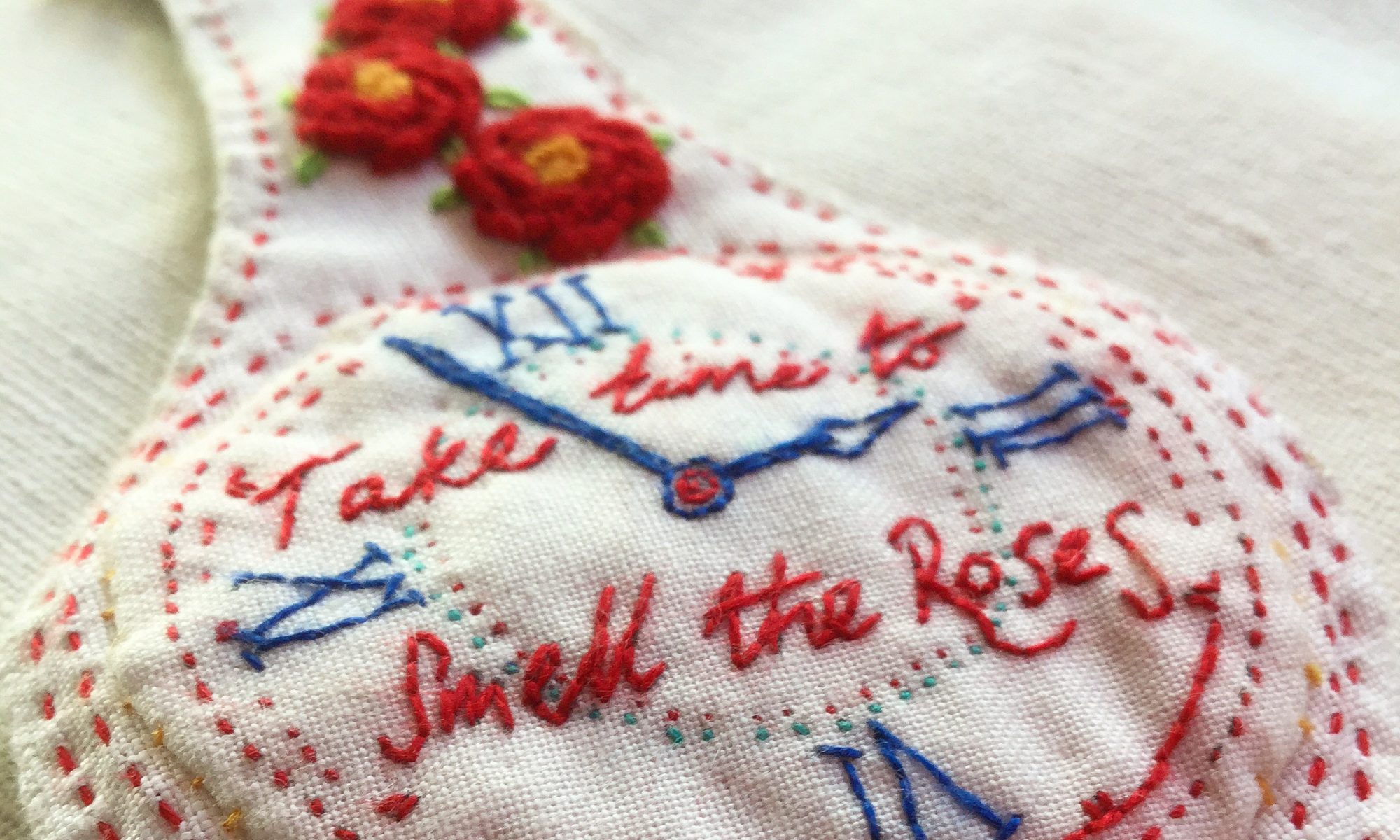

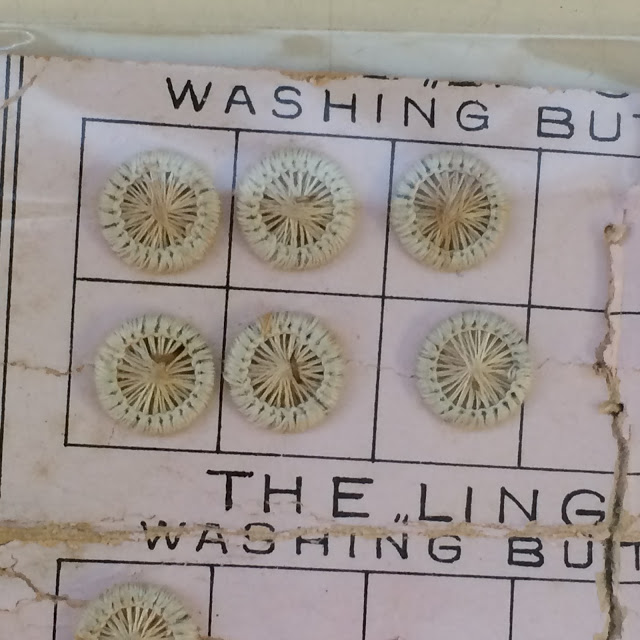
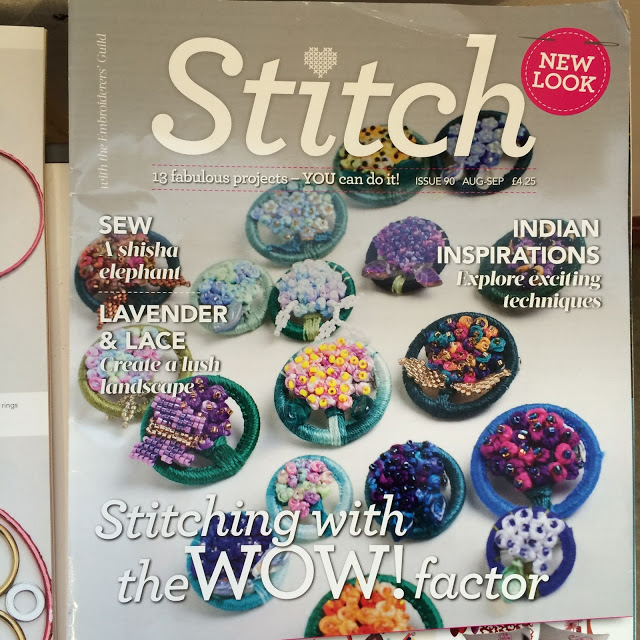
I have wanted to learn the art of Dorset button making for some time. A two hour workshop at my local Embroiderers’ Guild cropped up, and was a perfect excuse to chat with my sewing chums and learn! A collection of stunning vintage pieces and a copy of Stitch magazine provided inspiration for our first Dorset Button.
So I started my first ever Dorset Button. Any ring made of plastic, bone or metal will do the job perfectly. Perle cotton number 8 thread, a tapestry needle, a brass ring and blanket stitch. This stage was called ‘Casting’. I found out that the thread needs to be longer than you think – enough to finish the whole project. I was recommended 3 arm lengths of thread which was ample for a medium to large size ring.
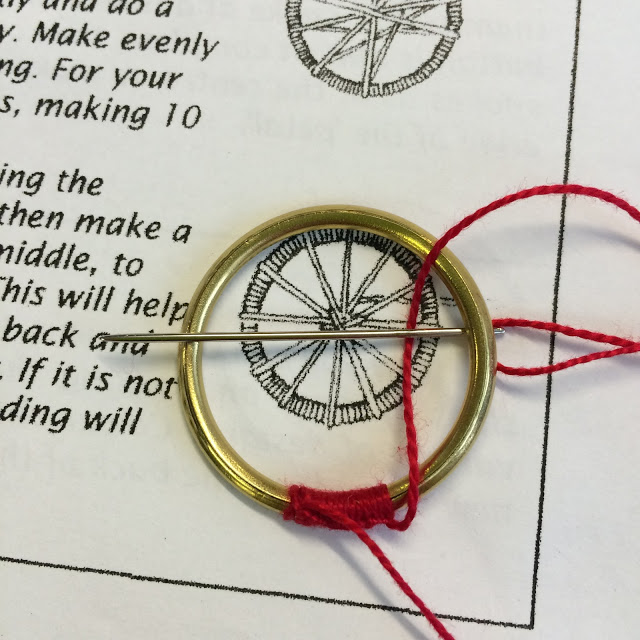 |
| Blanket Stitch – Casting |
Next came ‘Slicking’. The ridge formed by the blanket stitch was turned to the centre of the ring, making a smooth edge to the ring ready for the next stage.
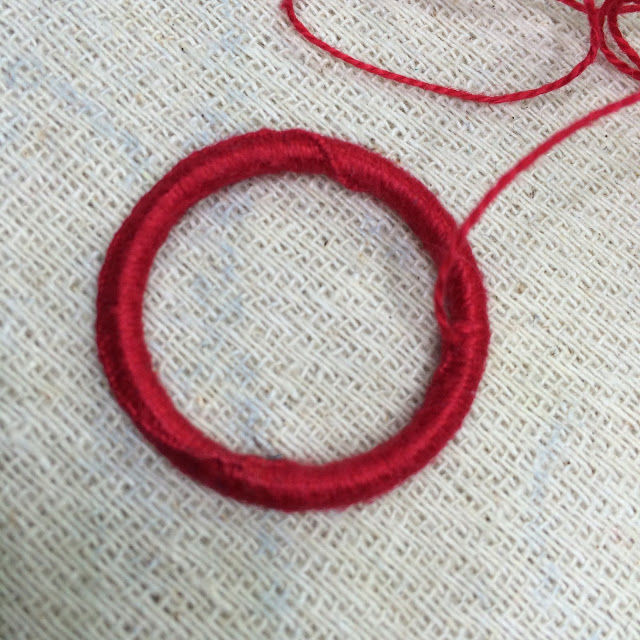 |
| Turning edge to centre – Slicking |
‘Laying’ was next. The thread was wound around the ring like spokes in a wheel. The number of spokes and their position on the ring can vary depending upon the pattern being created. I was making a Dorset Crosswheel so I only needed 8 spokes. I centred the spokes with two cross stitches before moving onto Rounding.
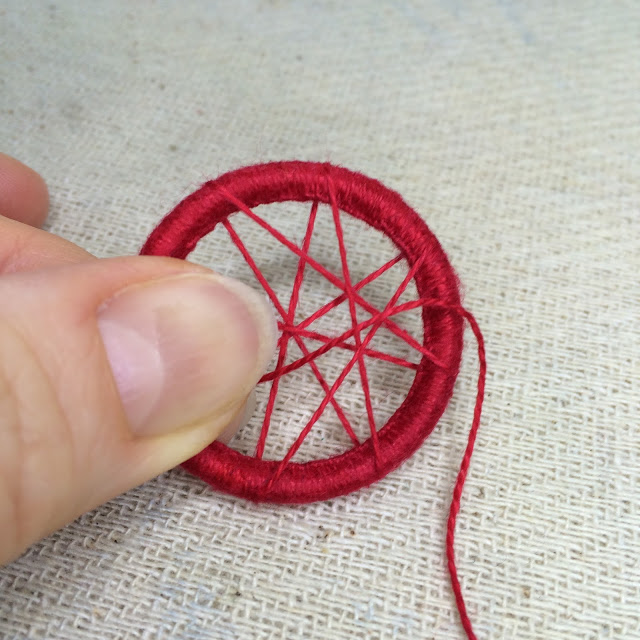 |
| Making spokes – Laying |
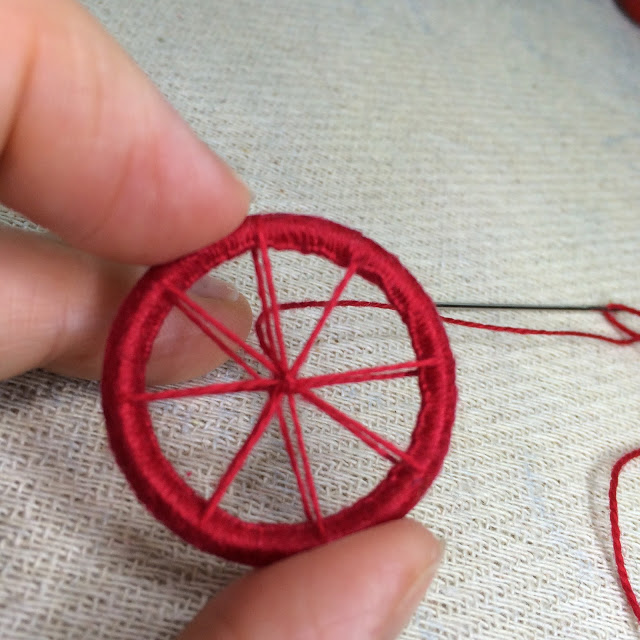 |
| Cross-stitch in centre of spokes, ties them together |
‘Rounding’ was the final stage. Working from the back of the button, the thread was wound around the spokes in a kind of backstitch effect. This made the ‘ridges’ on the button front.
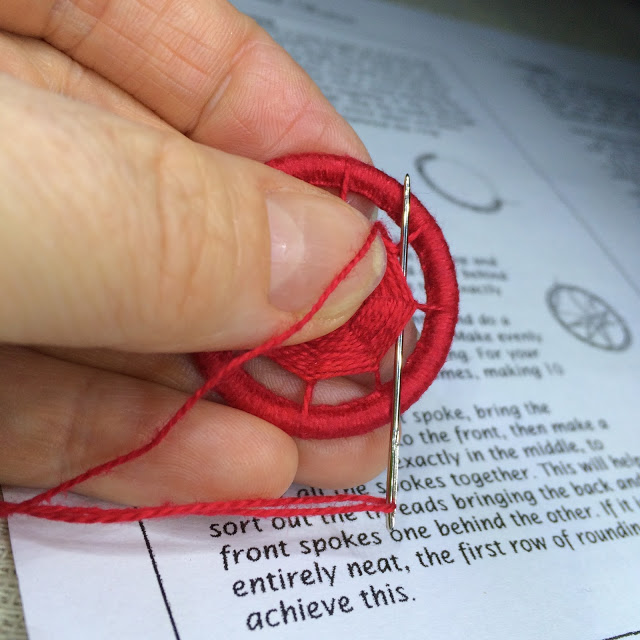 |
| Using a backstitch around spokes – Rounding |
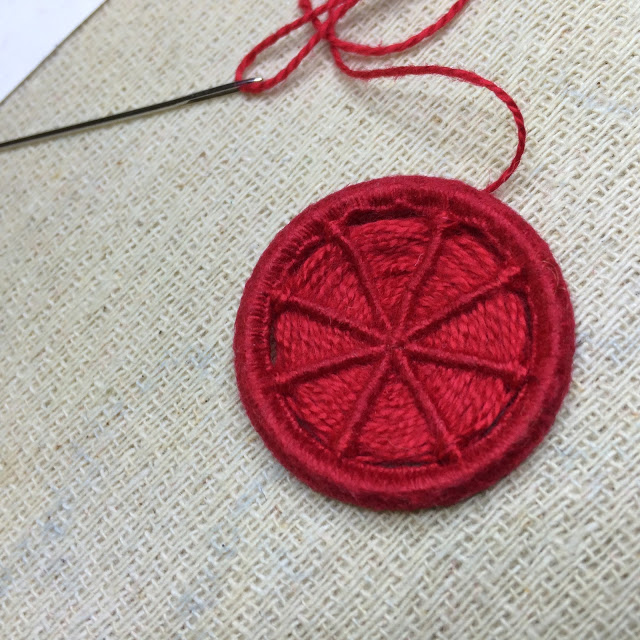 |
| Button Front |
It was a very therapeutic morning of sewing. I went home and made a few more before the day was over – it’s quite addictive. Dorset buttons are brilliant for embroiderers. Each button has a fabulous textured surface that’s a perfect background just waiting for more decorative stitching.
These are some of the pieces made over the weekend of the workshop. They include a few rings that have been Casted and are awaiting the next stage – when I can decide what design to settle on !
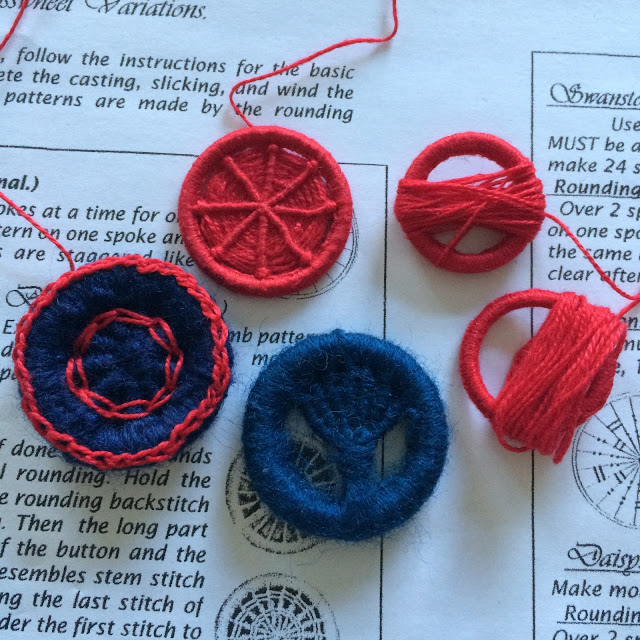
I hope this has inspired you to take a look at Dorset buttons and have a go making one. For more information on Dorset Buttons, check out the Gold Hill Museum in Dorset where the famous Hovis Hill is and a collection of original vintage Dorset Buttons can be found.