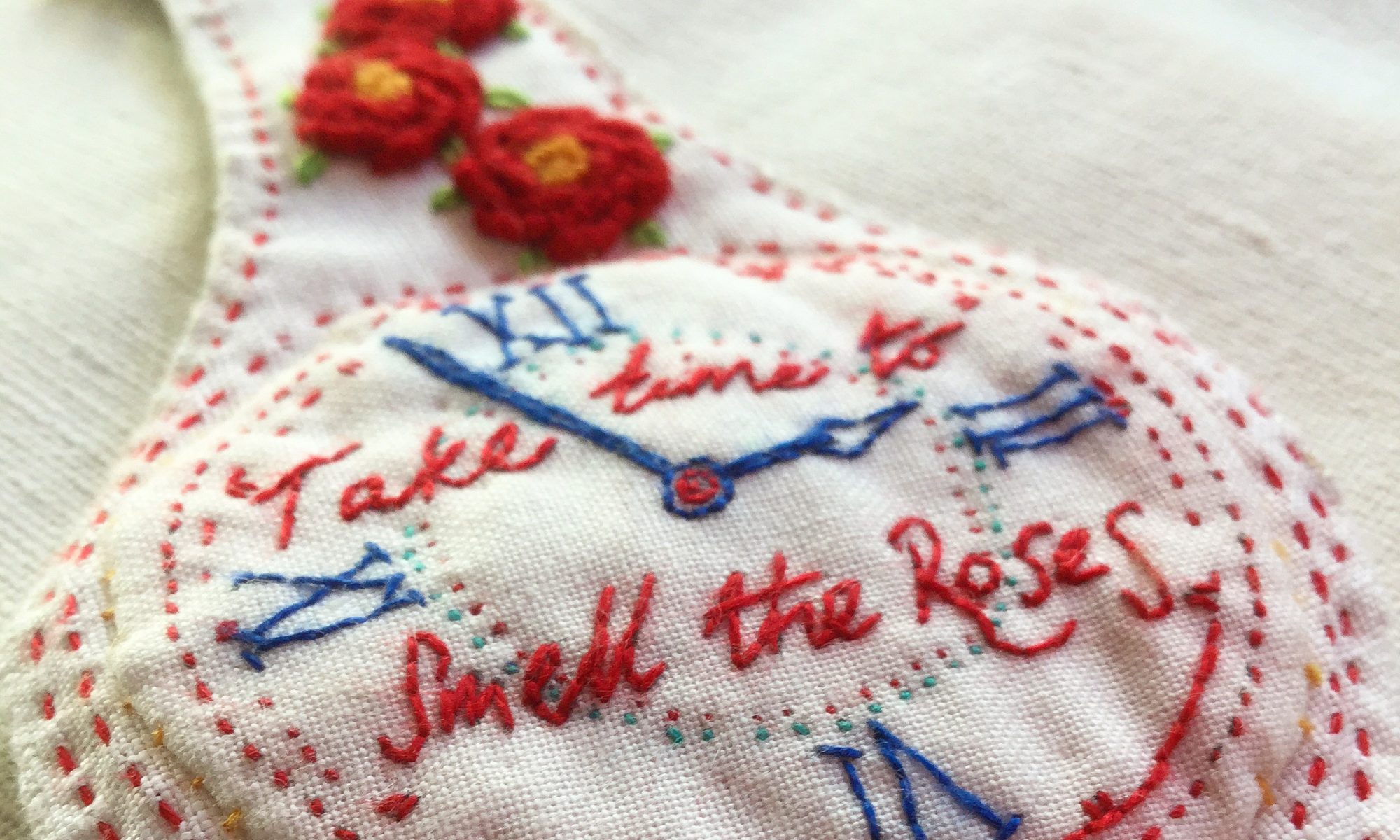

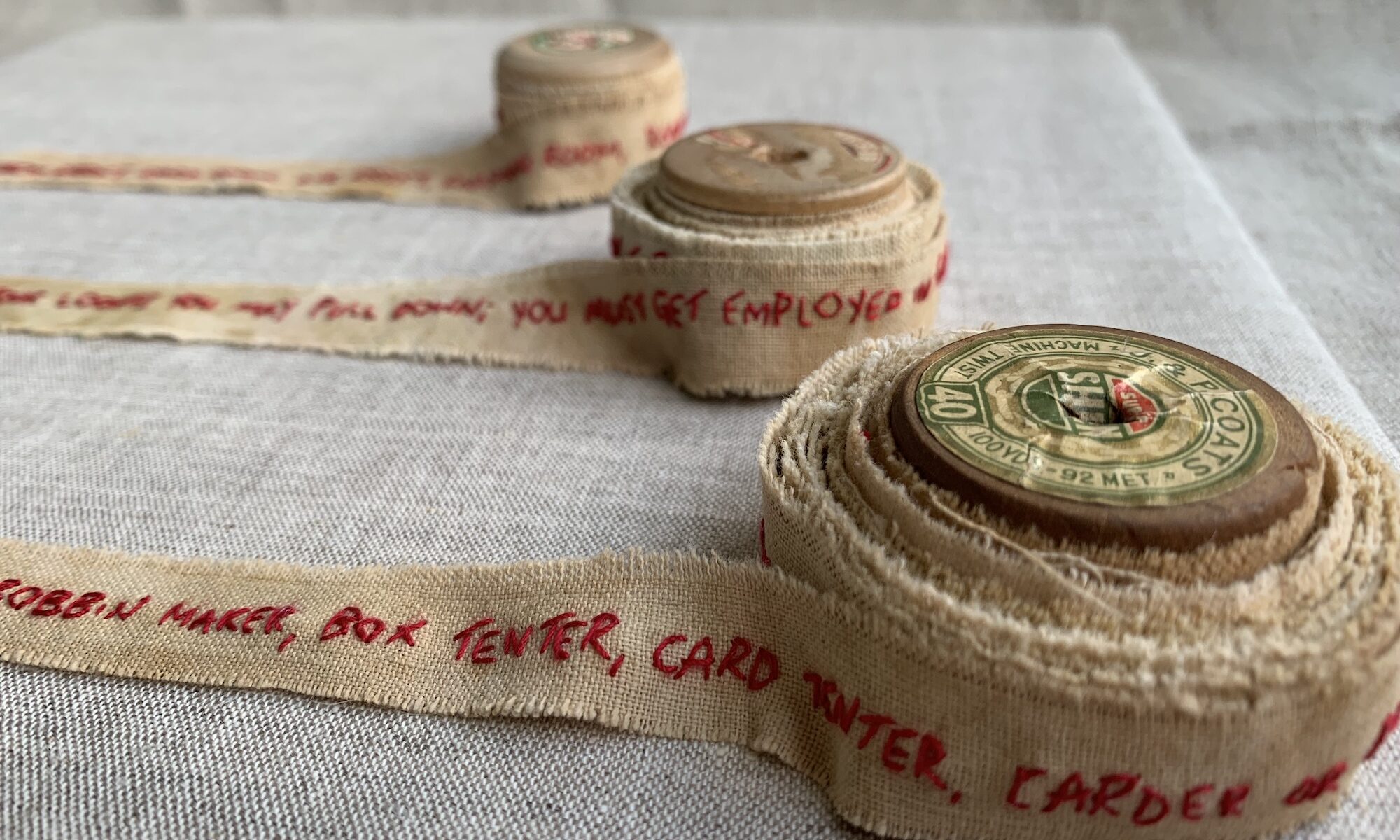
My latest artworks called Reel Stories, started life as a handful of reels that I rediscovered after a day sorting through my collection of vintage cotton reels. The smallest reels are a perfect size for my hand embroidered text.
It’s funny how a relaxed day pottering around can spark an idea.
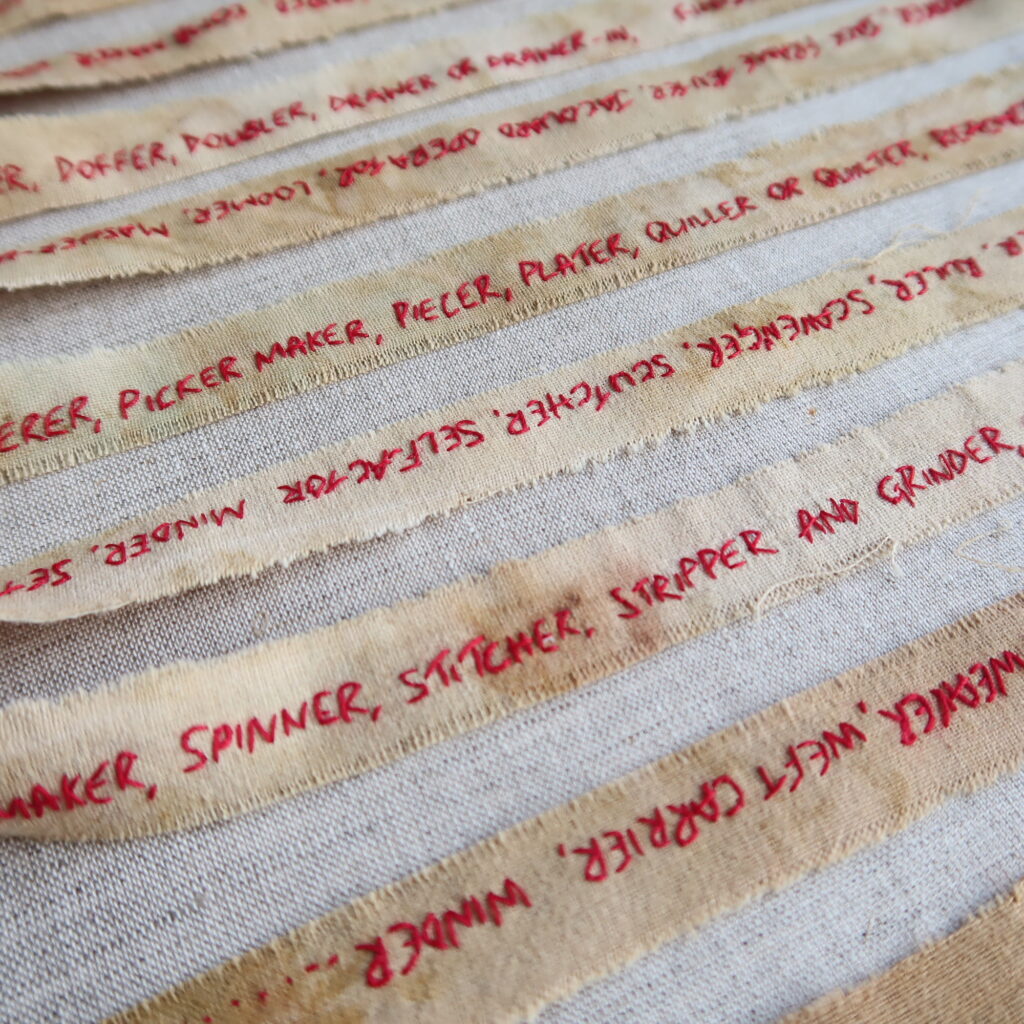
The cotton cloth is an old pillowcase that I eco printed with plants from my garden – to date I’ve created three artworks in this series.
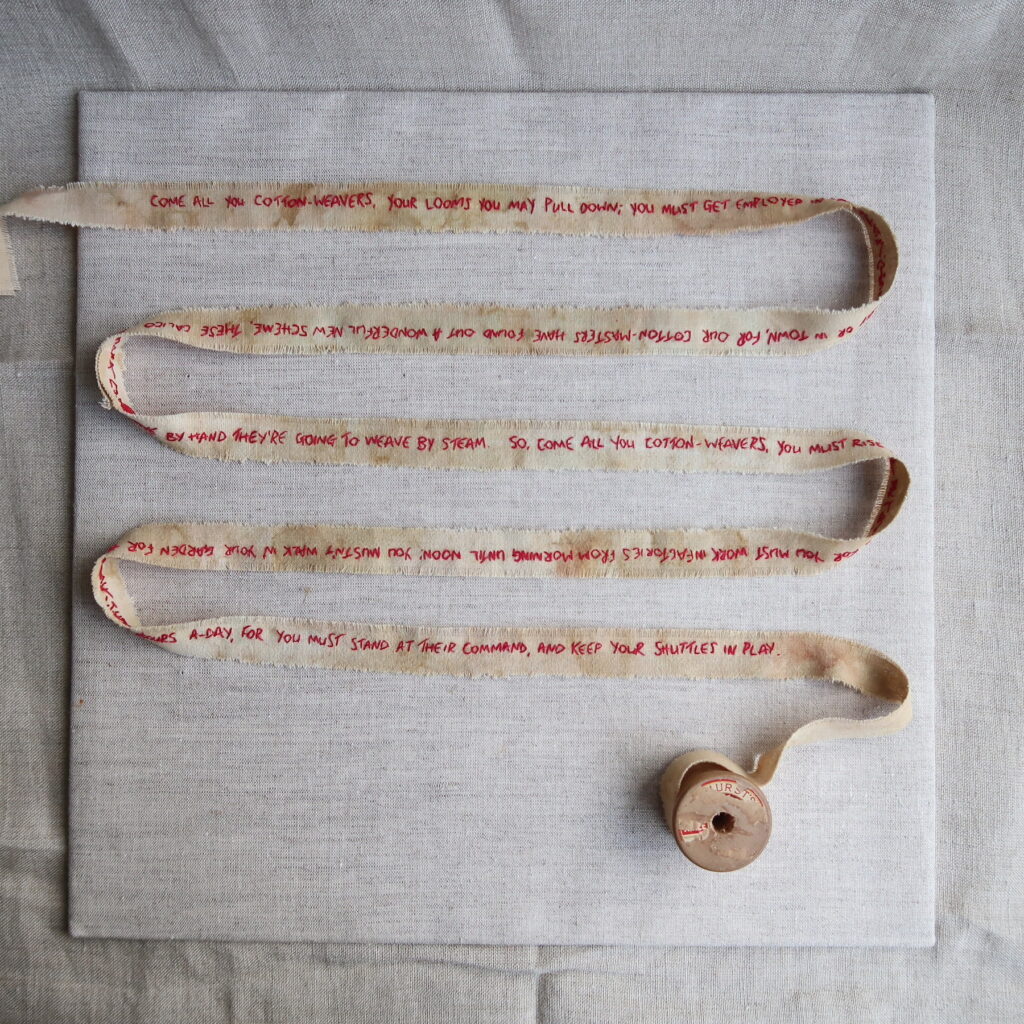
The first features an extract from a Lancashire poem ‘Hand Loom v. Power Loom’, author unknown. Unwound the artwork is 2 wide x 2m long.
Come all you cotton weavers, your looms you may pull down.
You must get employment in factories, in country or in town.
For our cotton masters have a wonderful new scheme:
These calico goods now wove by hand, they’re going to weave by steam.There’s sow-makers and dressers and some are making warps.
These poor pincop-spinners they must mind their flats and sharps.
For if an end slips under, as sometimes perchance it may,
They’ll daub you down in black and white and you’ve a shilling to pay.The weavers’ turn will next come on, for they must not escape.
To enlarge the master’s fortune, they are fined in every shape.
For thin places or bad edges, a go or else a float,
They’ll daub you down and you must pay three pence or else a groat.If you go into a loom shop where there’s three or four pairs of looms,
They all are standing idle, a-cluttering up the rooms.
And if you ask the reason why, t’ould mother will tell you plain:
“My daughters have forsaken them and gone to weave by steam.”So come all you cotton weavers, you must rise up very soon,
‘Hand Loom v. Power Loom’, author unknown.
For you must work in factories from morning until noon.
You mustn’t walk in your garden for two or three hours a day,
For you must stand at their command and keep your shuttles in play.
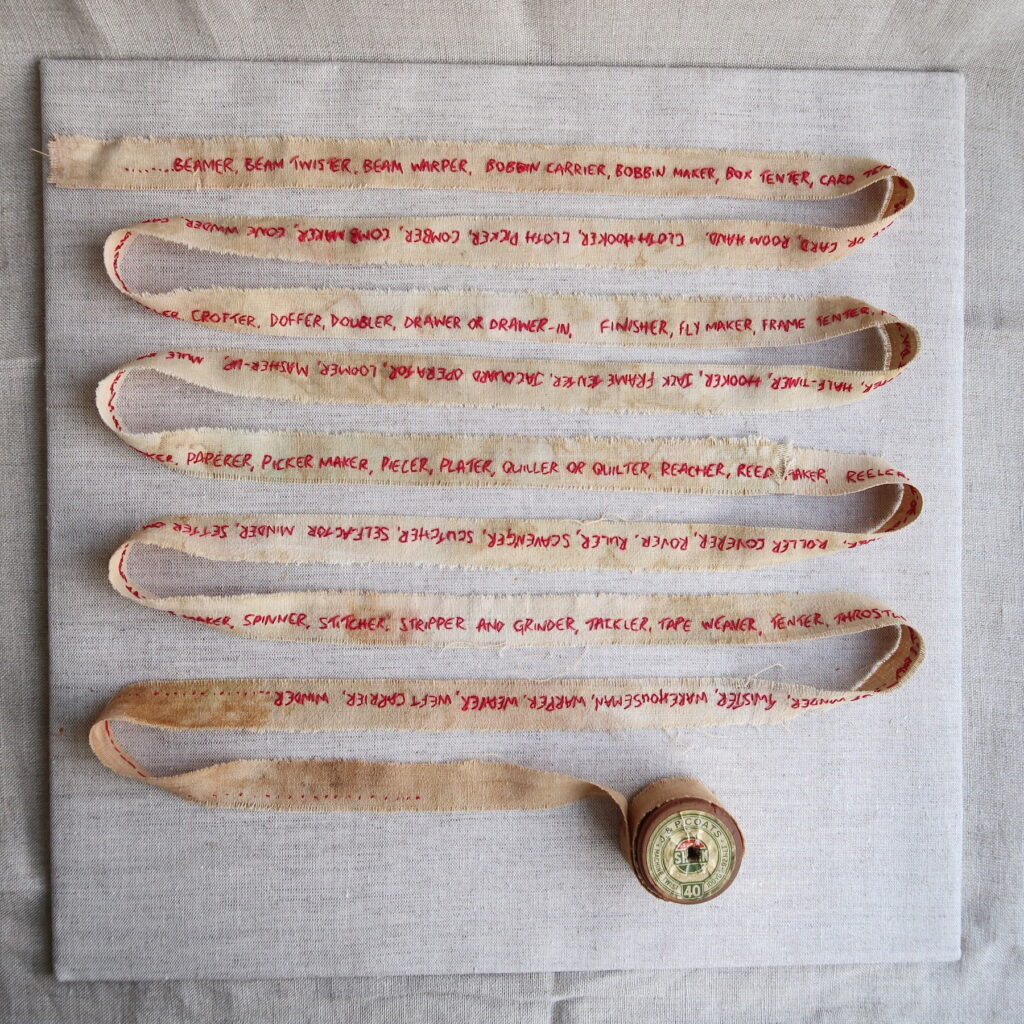
The second artwork is a list of all the cotton mill workers jobs which includes titles like quilter, beamer and tenter. Unwound the artwork is 2cm wide x. 2.7m long
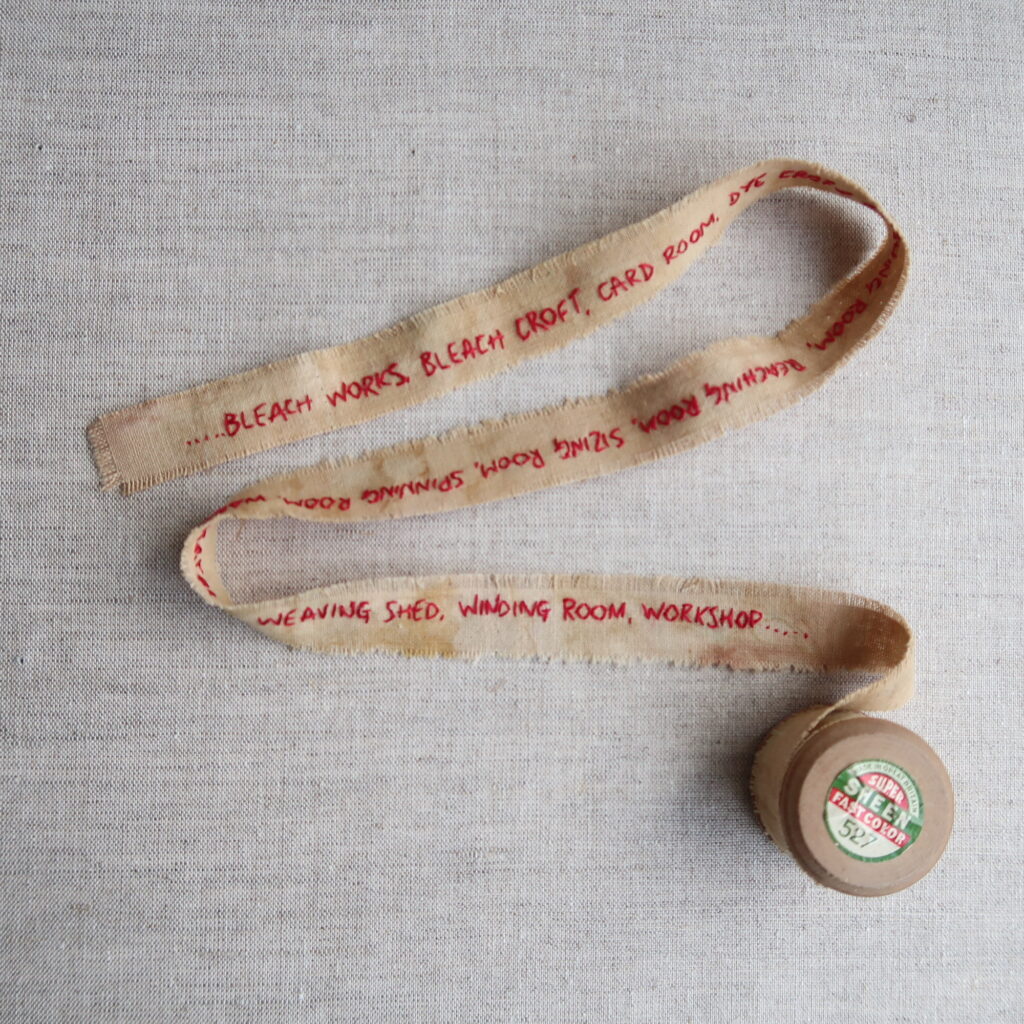
The third artwork documents the cotton industry mills and works that processed the cotton. Unwound the size is 2cm wide x 70cm long.
These pieces are part of a body of work about the Lancashire cotton industry.
Update:
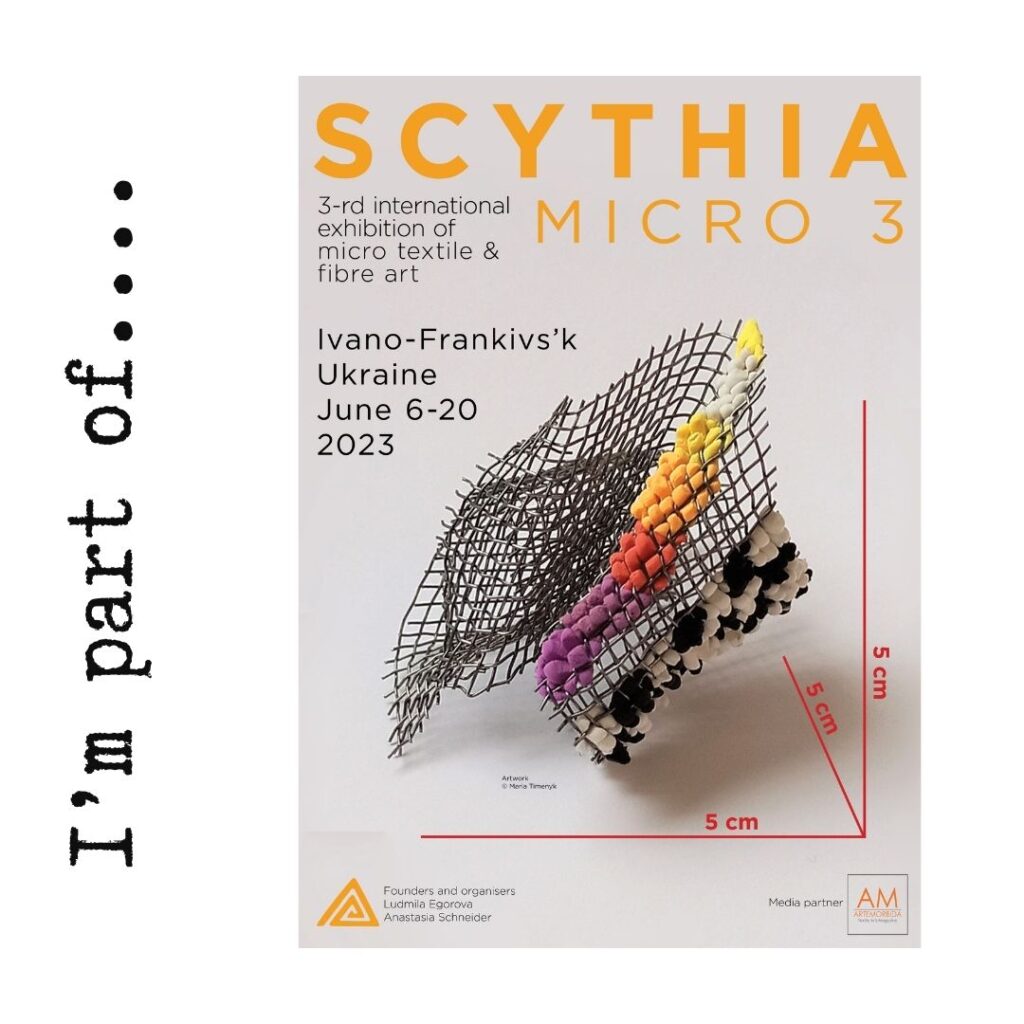
I’m pleased to announce that Reel Stories 1 & 3 have been accepted for the 3rd International Micro Textile and FIbre Art Exhibition “Scythia” at 17.00, str. Mariyky Pidhiryanky 23, Ivano-Frankivs’k, Ukraine. 6th – 20th June 2023 (the exhibition catalogue is available to view here – my artwork appears on page 34)
The new edition of the international textile and fibre art exhibitions Mini and Micro Scythia, now in their 11th and 3rd year respectively, will open on 6 June. These two important events, which take place every two years, are part of the larger project that includes the well-known International Biennial of Contemporary Textile and Fibre Art Scythia and the Fibremen exhibition.
In the Mini Textile category, works by 131 artists from 33 countries will be exhibited, while 50 artists will be selected for the Micro Textile and Fibre art exhibition, representing 23 countries.
Scythia 2023
For more information please visit Scythia or discover more in an article in ArteMorbida magazine.